Showing posts with label TechCrunch. Show all posts

Tuesday, 5 November 2019

Chargify adds revenue forecasting tools to its suite of hosted payment management services

Chargify, the payment management service owned by Scaleworks, has added revenue forecasting tools to its software as a service offering.

The company’s new revenue forecasting tools uses historical data and month-over-month performance pulled from a company’s billing platform.

The company says its new tool can cut forecasting down from two months to as little as two minutes.

With a suite of billing and revenue management tools, Chargify already has a good window into previous performance. And the company hopes those forecasting tools can help businesses benchmark their revenue progress.

Using the new forecasting tool, companies can pull baseline metrics from historical growth and churn data looking at three-, six-, or twelve-month averages to understand how historical trends could affect businesses, the company said.

Beyond forecasting, the toolkit from San Antonio-based Chargify will save the projections and automatically trigger benchmark tracking to actual performance alongside the baseline forecast.


from TechCrunch https://ift.tt/36zK8Ma
//

Wednesday, 16 October 2019

Watch Rocket Lab’s next Electron rocket launch live

Rocket Lab is launching its ninth Electron rocket today, with the launch set for 00:41 UTC (8:41 ET/5:41 PT). The mission, called “As The Crow Flies,” will be taking off from the company’s LC-1 launchpad in New Zealand, carrying a payload from Astro Digital to orbit.

The launch was actually supposed to take a different spacecraft up to low Earth Orbit, but the payload was swapped late last month – an unusual move for a rocket launch, and one that Rocket Lab is using to demonstrate the flexibility of its commercial service model. Rocket Lab’s other customer had a delay, and Astro Digital was ready to send up one of its ‘Corvus’ imaging satellites, so it got to move up the timing of its launch as a result.

Rocket Lab is currently on track to launch as planned, and the launch stream for the mission will be live above starting at around 20 minutes out from the T-0 launch window.


from TechCrunch https://ift.tt/2nWPHTy
//

Sunday, 13 October 2019

Facebook should ban campaign ads. End the lies.

Permitting falsehood in political advertising would work if we had a model democracy, but we don’t. Not only are candidates dishonest, but voters aren’t educated, and the media isn’t objective. And now, hyperlinks turn lies into donations and donations into louder lies. The checks don’t balance. What we face is a self-reinforcing disinformation dystopia.

That’s why if Facebook, Twitter, Snapchat and YouTube don’t want to be the arbiters of truth in campaign ads, they should stop selling them. If they can’t be distributed safely, they shouldn’t be distributed at all.

No one wants historically untrustworthy social networks becoming the honesty police, deciding what’s factual enough to fly. But the alternative of allowing deception to run rampant is unacceptable. Until voter-elected officials can implement reasonable policies to preserve truth in campaign ads, the tech giants should go a step further and refuse to run them.

0A3B330A 3DC9 4A5F 9F7C 5EB85D753795

This problem came to a head recently when Facebook formalized its policy of allowing politicians to lie in ads and refusing to send their claims to third-party fact-checkers. “We don’t believe, however, that it’s an appropriate role for us to referee political debates and prevent a politician’s speech from reaching its audience and being subject to public debate and scrutiny” Facebook’s VP of policy Nick Clegg wrote.

The Trump campaign was already running ads with false claims about Democrats trying to repeal the Second Amendment and weeks-long scams about a “midnight deadline” for a contest to win the one-millionth MAGA hat.

Trump Ad

After the announcement, Trump’s campaign began running ads smearing potential opponent Joe Biden with widely debunked claims about his relationship with Ukraine. Facebook, YouTube and Twitter refused to remove the ad when asked by Biden.

In response to the policy, Elizabeth Warren is running ads claiming Facebook CEO Mark Zuckerberg endorses Trump because it’s allowing his campaign lies. She’s continued to press Facebook on the issue, asking “you can be in the disinformation-for-profit business, or you can hold yourself to some standards.”

It’s easy to imagine campaign ads escalating into an arms race of dishonesty.

Campaigns could advertise increasingly untrue and defamatory claims about each other tied to urgent calls for donations. Once all sides are complicit in the misinformation, lying loses its stigma, becomes the status quo, and ceases to have consequences. Otherwise, whichever campaign misleads more aggressively will have an edge.

“In open democracies, voters rightly believe that, as a general rule, they should be able to judge what politicians say themselves.” Facebook’s Clegg writes.

But as is emblematic of Facebook’s past mistakes, it’s putting too much idealistic faith in society. If all voters were well educated and we weren’t surrounded by hyperpartisan media from Fox News to far-left Facebook Pages, maybe this hands-off approach might work. But in reality, juicy lies spread further than boring truths, and plenty of “news” outlets are financially incentivized to share sensationalism and whatever keeps their team in power.

2931D35C EABA 490A BB17 3AAA1C3E49F3

Protecting the electorate should fall to legislators. But incumbents have few reasons to change the rules that got them their jobs. The FCC already has truth in advertising policies, but exempts campaign ads and a judge struck down a law mandating accuracy.

Granted, there have always been dishonest candidates, uninformed voters, and one-sided news outlets. But it’s all gotten worse. We’re in a post-truth era now where the spoils won through deceptive demagoguery are clear. Cable news and digitally native publications have turned distortion of facts into a huge business.

Most critically, targeted social network advertising combined with donation links create a perpetual misinformation machine. Politicians can target vulnerable demographics with frightening lies, then say only their financial contribution will let the candidate save them. A few clicks later and the candidate has the cash to buy more ads, amplifying more untruths and raising even more money. Without the friction of having to pick up the phone, mail a letter, or even type in a URL like TV ads request, the feedback loop is shorter and things spiral out of control.

This is why the social networks should halt sales of political campaign ads now. They’re the one set of stakeholders with flexibility and that could make a united decision. You’ll never get all the politicians and media to be honest, or the public to understand, but just a few companies could set a policy that would protect democracy from the world’s . And they could do it without having to pick sides or make questionable decisions on a case-by-case basis. Just block them all from all candidates.

F864D0B0 D9EE 4C3A 8A33 EE834EF136C8

Facebook wrote in response to Biden’s request to block the Trump ads that “Our approach is grounded in Facebook’s fundamental belief in free expression, respect for the democratic process, and the belief that, in mature democracies with a free press, political speech is already arguably the most scrutinized speech there is.”

But banning campaign ads would still leave room for open political expression that’s subject to public scrutiny. Social networks should continue to let politicians say what they want to their own followers, barring calls for violence. Tech giants can offer a degree of freedom of speech, just not freedom of reach. Whoever wants to listen can, but they shouldn’t be able to jam misinformation into the feeds of the unsuspecting.

If the tech giants want to stop short of completely banning campaign ads, they could introduce a format designed to minimize misinformation. Politicians could be allowed to simply promote themselves with a set of stock messages, but without the option to make claims about themselves or their opponents.

Campaign ads aren’t a huge revenue driver for social apps, nor are they a high-margin business nowadays. The Trump and Clinton campaigns spent only a combined $81 million on 2016 election ads, a fraction of Facebook’s $27 billion in revenue that year. $284 million was spent in total on 2018 midterm election ads versus Facebook’s $55 billion in revenue last year, says Tech For Campaigns. Zuckerberg even said that Facebook will lose money selling political ads because of all the moderators it hires to weed out election interference by foreign parties.

Surely, there would be some unfortunate repercussions from blocking campaign ads. New candidates in local to national elections would lose a tool for reducing the lead of incumbents, some of which have already benefited from years of advertising. Some campaign ads might be pushed “underground” where they’re not properly labeled, though the major spenders could be kept under watch.

If the social apps can still offer free expression through candidates’ own accounts, aren’t reliant on politicians’ cash to survive, won’t police specific lies in their promos, and would rather let the government regulate the situation, then they should respectfully decline to sell campaign advertising. Following the law isn’t enough until the laws adapt. This will be an ongoing issue through the 2020 election, and leaving the floodgates open is irresponsible.

If a game is dangerous, you don’t eliminate the referee. You stop playing until you can play safe.


from TechCrunch https://ift.tt/2IMUz4y
//

Friday, 11 October 2019

Pegging Libra to just the $ could soothe regulators, a16z says

What if Libra wasn’t backed by a basket of international currencies, but only the dollar?

Regulatory pushback to the Facebook-led cryptocurrency Libra has caused major partners including Visa, MasterCard, PayPal, and eBay to pull out of the Libra Association. But one of the remaining members has floated a major change to the stablecoin that could calm concerns that Libra could hurt the world economy by challenging national currencies for supremacy.

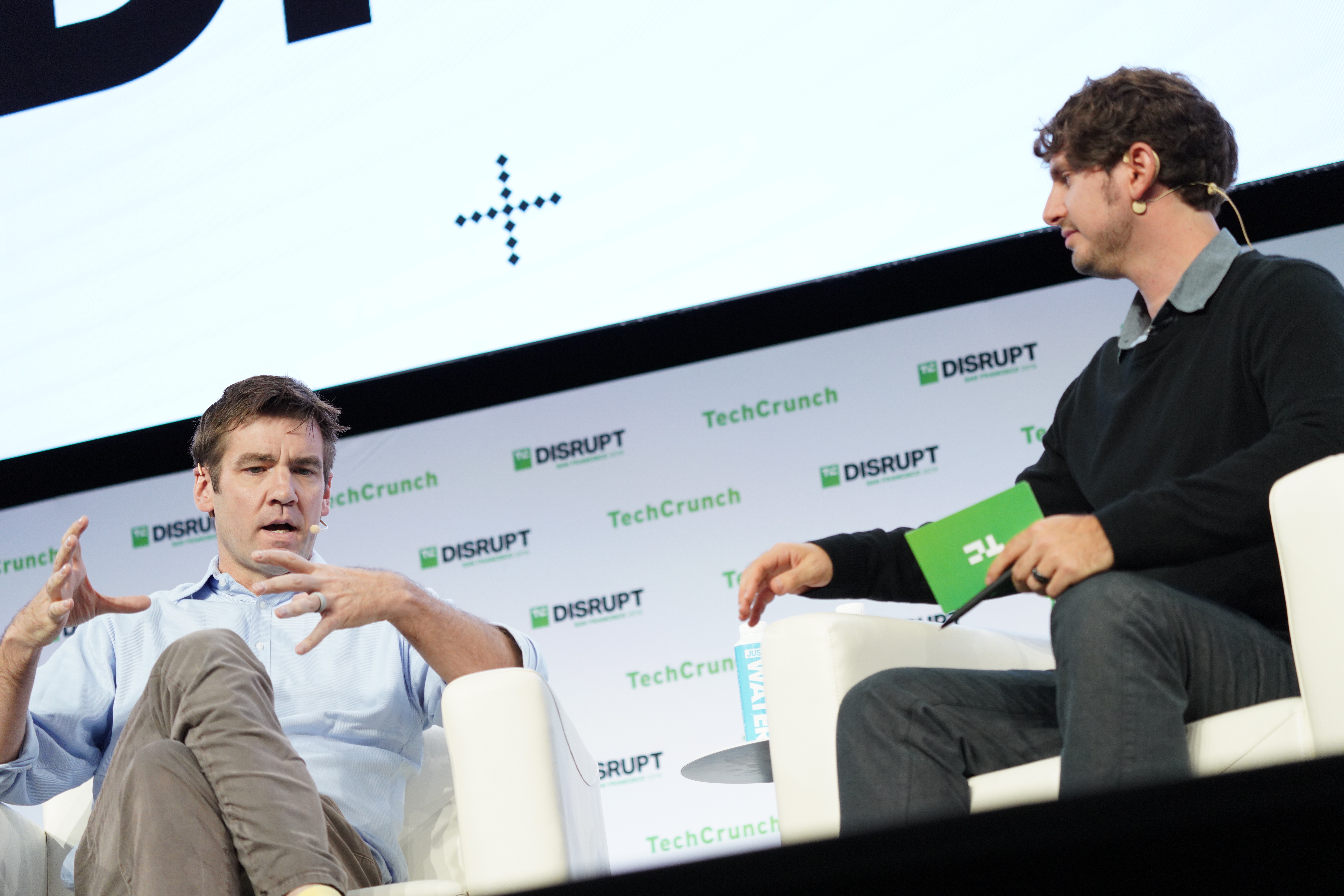
Last week, venture partner Chris Dixon of Andreessen Horowitz’s a16z Crypto, one of the remaining members of the governing Libra Association, spoke  on stage at TechCrunch Disrupt. He said he still believed Libra will launch, but it might require some changes to get the green light from governments. When I asked what changes might assuage regulators, he told me “For example, denominating the currency in US dollars. I’m giving a hypothetical example. My understanding is the intention was never to create a new currency. It’s much focused on the payment rails.”

Dixon meant that Libra could be pegged directly to the US dollar instead of to a basket of international currencies as is currently the plan, a16z Crypto clarified when asked.

Originally, Libra was slated to be denominated in…Libra using the unicode symbol ≋. It would be a stablecoin backed 1:1 with a basket of the world’s top currencies that Reuters says Der Spiegel reports Facebook told a German legislator would be made up of 50% US dollar, 18% Euro, 14% Japanese Yen, 11% British pound, and 7% Singaporean dollar.

The purpose of the basket was to make Libra’s value more consistent. A spike or decline in value of any currency in the basket would have limited impact on Libra’s value, and the basket could be altered in makeup to further protect it from fluctuations.

Libra cryptocurrency logo

But if it was denominated in $, the US regulators in particular might be less worried that citizens might choose to use the Libra instead of the dollar. This might demonstrate that Libra sees itself as deferential to the American economic system and government Facebook must answer to.

Conversely, the Libra would become vulnerable to shifts in value of the US dollar. But since many international currencies and financial systems are also linked to the dollar, there at least would be more precedent for how Libra would operate. The move could make foreign governments less skiddish about the cryptocurrency since their national currencies wouldn’t be directly influenced.

On Monday, the Libra Association will meet to finalize its membership, elect a board, and create a charter governing its efforts. How Libra is denominated could be reviewed at this meeting.

Denominating in dollars that could quell another worry about the cryptocurrency — that if it became popular and the Libra Association decided to change the basket’s components or remove one currency, it could significantly impact that currency’s value.

The French Finance Minister Bruno Le Maire previously said “the monetary sovereignty of countries is at stake from a possible privatisation of money . . . we cannot authorise the development of Libra on European soil.”

Facebook’s head of Libra David Marcus has tried to dispel this idea, saying Libra is designed to run “on top of existing currencies . . . there’s no new money creation, which will strictly remain the province of sovereign Nations.” Yet regulators are still largely opposed to its planned launch in 2020.

Pegging Libra to the dollar would give the Libra Association less flexibility to maintain a steady value, but also less power. Governments wouldn’t fear that they’d need to maintain a positive relationship with the Libra Association for fear of their currency being ejected from the basket. It would put Libra more directly in competition with other stablecoins like Tether that are locked to the US dollar.

Chris Dixon DSC02399

a16z Crypto’s Chris Dixon (left) speaks with TechCrunch’s Josh Constine at Disrupt SF 2019

Dixon also announced that Andreessen Horowitz is launching the a16z Crypto Startup School, which will offer a free, zero-equity educational program for blockchain entrepreneurs. The goal is to pass knowledge from seasoned cryptocurrency startup founders to newer entrants to the space.

Dixon says the hope is that the best students would seek investment from the fund but that won’t be required. Those interested can sign up for more info on how to apply when it’s available, though videos of the school’s sessions will be available.

Andreessen Horowitz’s commitment to cryptocurrency could make it less likely to abandon the Libra Association than some other payments companies more firmly rooted in the status quo financial system. That loyalty will only pay off if Libra ever passes muster with regulators and actually reaches the market.


from TechCrunch https://ift.tt/35v6ZYD
//

Saturday, 5 October 2019

HTC stopped innovating on smartphones, new CEO admits

Several months back, we invited HTC cofounder and CEO Cher Wang to appear on stage at TechCrunch Disrupt. Sometimes, however, life happens. Two weeks ago, the company announced that Wang would be stepping down from the role, which would immediately be filled by longtime telecom vet, Yves Maitres. Thankfully, the former Orange exec also agreed to appear on stage at this week’s event.

Maitres took the stage immediately following a one on one with OnePlus cofounder, Carl Pei. The contrast of the two companies couldn’t be more stark. In six short years of existence, OnePlus has managed to buck a number of industry trends with a controlled growth that flies in the face of wider industry smartphone trends.

HTC, meanwhile, has been struggling for years. In Q2, the Taiwanese hardware maker posted its fifth consecutive quarterly loss. Last July, it laid off around a quarter of its staff. It’s been a precipitous fall. In 2011, the company comprised around 11 percent of global smartphone sales, per analyst figures. Now its figures are routinely classified among the “Others” in those reports.

Speaking to Maitres at an event such as this offers a rare opportunity for insight from a newly minted exec who has spent years watching his new company from the outside. As such, he addressed HTC’s struggles with a refreshing candidness.

“HTC has stopped innovating in the hardware of the smartphone,” he told the audience. “And people like Apple, like Samsung and, most recently, Huawei, have done an incredible job investing in their hardware. We didn’t, because we have been investing in innovation on virtual reality. When I was young, somebody told me, ‘to be be right at the wrong time is to be wrong and to be wrong at the right time is right.’ I think we’ve been right at the wrong time and now we have to catch up. We made a timing mistake. It is very difficult to anticipate the time. HTC made a mistake in terms of timing. It is a difficult mistake and we are paying for that, but we still have so many assets in terms of innovation, team and balance sheets that I feel we are recovering from the timing mistake.”

‘Timing,’ here, is primarily a reference to the company’s decision to move much of its R&D money into XR (primarily VR through its Vive wing). Maitres said he anticipates that HTC’s XR offerings will overtake the mobile side in about five years.

“We’ll do our best to make it shorter, but customer adoption is key,” he explained. “How people are adopting your technology. And we all know know it is absolutely critical. And the end of the day, we have human beings in front of us, and they’re dealing with something total new and totally unusual, which is virtual.”

On the mobile side, Maitres sees 5G as the primary bottleneck to growth. Contrary to suggestions that the company’s best play is in developing nations, he says HTC’s play going forward will be more premium handset focused on “countries with higher GDP.”

“The competition is changing,” he says. “We’re all having a situation where worldwide marketshare is going down and the customer is disappointed in not being to have the latest Huawei phone anymore. How to give our customers the ability to come back to what they wish, in terms of best in class hardware and photography that HTC to will to solve in the next few months.”

While figures will largely be dependent on decisions Brough to HTC’s board, Maitres maintains optimistic projections when it comes to returning the company profitability.

“I truly believe that it is going to depend on the way carriers deploy 5G,” he says. “And you know that 2020 will bee the starting point for 5G. Usually it takes two years to deploy a network. So 2023 will have significant coverage. That’s why I believe that 2025, probably even earlier will be the turning point. We are dependent on carrier deployment speed.”


from TechCrunch https://ift.tt/30PHrlJ
//

Tuesday, 10 September 2019

Audi’s off-roading electric concept would be perfect for Tatooine

Concept vehicles are a staple of the auto show circuit. And while most will never end up as a production vehicle, they can provide insight into an automaker and clues to where it’s headed.

Over at Audi, designers and engineers might have had a distant planet in mind. Or at least an expanse of wilderness.

The German automaker unveiled Tuesday at the Frankfurt Motor Show the Audi AI: TRAIL quattro, a concept electric vehicle designed for the “future of off roading.” The “Trail” off roader is one of four concept vehicles that Audi has presented at various auto shows since 2017. Other concepts included a sports car, luxury vehicle and one designed for megacities.

Audi argues that these concepts aren’t efforts of futility. Instead, the company says it these four vehicles show how Audi vehicles in the future will be designed for specific use cases.

“In the future, customers will be able to order any of these specialist Audi models from an Audi on-demand vehicle pool to suit their personal preferences and requirements and to lease them for a limited period,” the company said in its announcement.

Audi takes this idea of the on-demand subscription further by noting that vehicles will be configured to suit individual preferences of customers who use this still non-existent and totally conceptual on-demand product. All the essential customer information would be stored in the myAudi system and accompanying app, the company said.

In the video below, Audi’s head of design Marc Lichte explains the thinking behind these concepts.


In the case of the Audi AI: TRAIL, designers put an emphasis on exploration and seeing the surrounding environment. It even comes with five drones, which aside from replacing the headlights, can provide other tasks such as lighting up your camping area or picnic spot.

The all-electric concept, which has a range of up to 310 miles, is about 13.5 feet long and 7 feet wide and is outfitted with beefy 22-inch wheels. And because it’s a vehicle meant to off road, designers gave it ground clearance of 13.4 inches. This concept, if it really existed beyond the showroom floor, can ford through water more than half a meter deep. The range of the vehicle does drop on rough roads to about 155 miles, which would theoretically (if this vehicle actually existed) make wilderness travel more difficult.

[gallery ids="1880216,1880211,1880220,1880215,1880212,1880213,1880210,1880221,1880214,1880207"]

The battery unit is integrated into the floor providing a spacious interior that sits four people. Glass surrounds the cabin to provide unrivaled views of the environment, whether it’s an earthly vista or the binary sunset over the fictional Tatooine desert.

The remaining exterior body is made of a mixture of high-tech steel, aluminum and carbon fiber, giving it a total weight of 3,858 pounds.

The concept vehicle is equipped with four electric motors, systems for assisted and automated driving and all-wheel drive. What you won’t find are any screens for streaming video. This concept was designed for viewing the outside world.

The interior, which uses recycled materials, is scant. There are pedals, a yoke for a steering wheel, a few buttons, and a smartphone attached to the steering column as a display and control center for vehicle functions and navigation.

The second row features seats that are designed to function like hammocks — and can be removed and used as mobile outdoor chairs.

Drones as headlights!

Perhaps the most interesting feature is the inclusion of five rotorless electrically operated drones, which serve a variety of purposes. The drones, which have matrix LED lighting, can dock on the roof to get more power with the inductive charging elements.

Audi calls these drones Audi Light Pathfinders because of their ability to fly and illuminate the path ahead. These drones, Audi says replace headlights altogether. When the vehicle is parked, the drones can be used ti light up the surrounding area.

Occupants control the drones through their smartphones in this theoretical use case. The on-board cameras can generate a video image that can be transmitted to the display in front of the driver via Wi-Fi, turning the Pathfinders into “eyes in the sky,” Audi says.


from TechCrunch https://ift.tt/34EwO88
//

Wednesday, 4 September 2019

Bellwether Coffee, ‘the fastest-growing company in coffee,’ raises $40M Series B

There’s an arms race in retail to produce better coffee, and one startup, Bellwether Coffee, thinks it has the solution for retailers to sell the very best beans.

The business, headquartered in Berkeley, is today announcing a $40 million Series B financing led by DBL Partners and SolarCity co-founders Peter and Lyndon Rive. The round brings its total funding to $56 million, including a $10 million Series A last summer.

The hardware and software business manufactures tech-enabled zero-emission commercial coffee roasters designed to sit in cafes, grocery stores, on college campuses and any other place people buy coffee. Purchase of a roaster, which are sold for $75,000 or leased for $1,000 per month, comes with access to an online marketplace for coffee beans. The goal is to give coffee shops the power to roast their own beans, forgoing the middle men that have historically sold wholesale pre-roasted beans at a premium to cafes around the world.

“We want to create this connected coffee experience from the farm in Ethiopia all the way to the roaster at the cafe and the customer,” Bellwether chief executive officer Nathan Gilliland tells TechCrunch.

With roughly 140 customers, Bellwether plans to expand manufacturing capabilities and grow its customer-facing team with the infusion of venture capital funding. After growing revenues 6x in 2019, the startup is also unlocking its global ambitions, with launches in Southeast Asia and Europe scheduled for next year.

Gilliland credits the company’s growth to a larger movement at play: The “premiumization of coffee,” in which consumers are in search of higher quality cups of joe.

“You saw it happen with wine, you saw it in craft beer,” he said. “You were drinking Bud Light and now you’re drinking craft beer. You see it in higher-end grocery stores pushing out these products; it’s the premiumization of the category.”

“Thirty years ago, everyone drank Folgers, then Starbucks changed how everyone thought about coffee in the 80s, then Blue Bottle took it to the next step and that’s the backdrop,” he added.

Bellwether was founded in 2013 by Ricardo Lopez. The company is also backed by FusionX, Congruent Ventures, Coffee Bell, Tandem Capital, Spindrift Equities, XN Ventures, Balius Partners and Hardware Club.


from TechCrunch https://ift.tt/34rmXT5
//