Showing posts with label Gadgets – TechCrunch. Show all posts

Thursday, 30 May 2019

SpaceX reveals more Starlink info after launch of first 60 satellites

Last night’s successful Starlink launch was a big one for SpaceX — its heaviest payload ever, weighed down by 60 communications satellites that will eventually be part of a single constellation providing internet to the globe. That’s the plan, anyway — and the company pulled the curtain back a bit more after launch, revealing a few more details about the birds it just put in the air.

SpaceX and CEO Elon Musk have been extremely tight-lipped about the Starlink satellites, only dropping a few hints here and there before the launch. We know, for instance, that each satellite weighs about 500 pounds, and are a flat-panel design that maximized the amount that can fit in each payload. The launch media kit also described a “Startracker” navigation system that would allow the satellites to locate themselves and orbital debris with precision.

At the fresh new Starlink website, however, a few new details have appeared, alongside some images that provide the clearest look yet (renders, not photographs, but still) of the satellites that will soon number thousands in our skies.

In the CG representation of how the satellites will work, you get a general sense of it:

Thousands of satellites will move along their orbits simultaneously, each beaming internet to and from the surface in a given area. It’s still not clear exactly how big an area each satellite will cover, or how much redundancy will be required. But the image gives you the general idea.

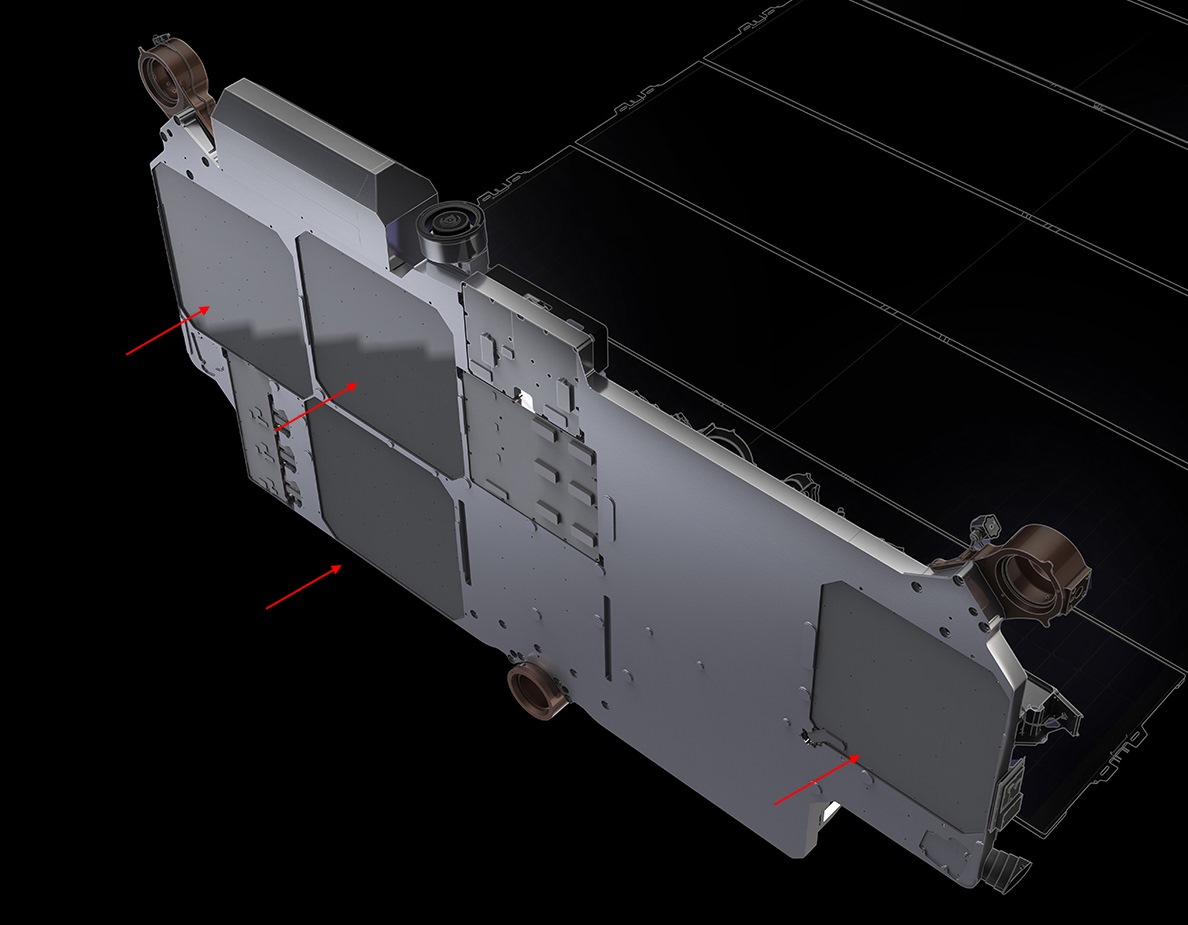
The signal comes from and goes to a set of four “phased array” radio antennas. This compact, flat type of antenna can transmit in multiple directions and frequencies without moving like you see big radar dishes do. There are costs as well, but it’s a no-brainer for satellites that need to be small and only need to transmit in one general direction — down.
There’s only a single solar array, which unfolds upwards like a map (and looks pretty much like you’d expect — hence no image here). The merits of having only one are mainly related to simplicity and cost — having two gives you more power and redundancy if one fails. But if you’re going to make a few thousand of these things and replace them every couple of years, it probably doesn’t matter too much. Solar arrays are reliable standard parts now.

The krypton-powered ion thruster sounds like science fiction, but ion thrusters have actually been around for decades. They use a charge difference to shoot ions — charged molecules — out in a specific direction, imparting force in the opposite direction. Kind of like a tiny electric pea shooter that, in microgravity, pushes the person back with the momentum of the pea.
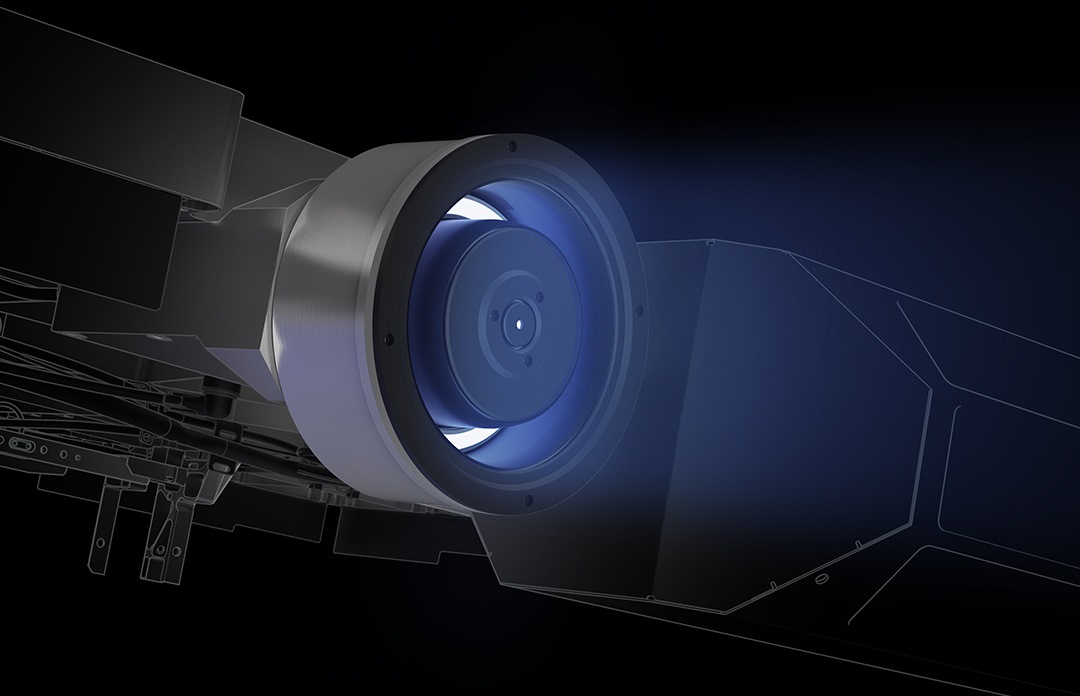
To do this it needs propellant — usually xenon, which has several (rather difficult to explain) properties that make it useful for these purposes. Krypton is the next Noble gas up the list in the table, and is similar in some ways but easier to get. Again, if you’re deploying thousands of ion engines — so far only a handful have actually flown — you want to minimize costs and exotic materials.
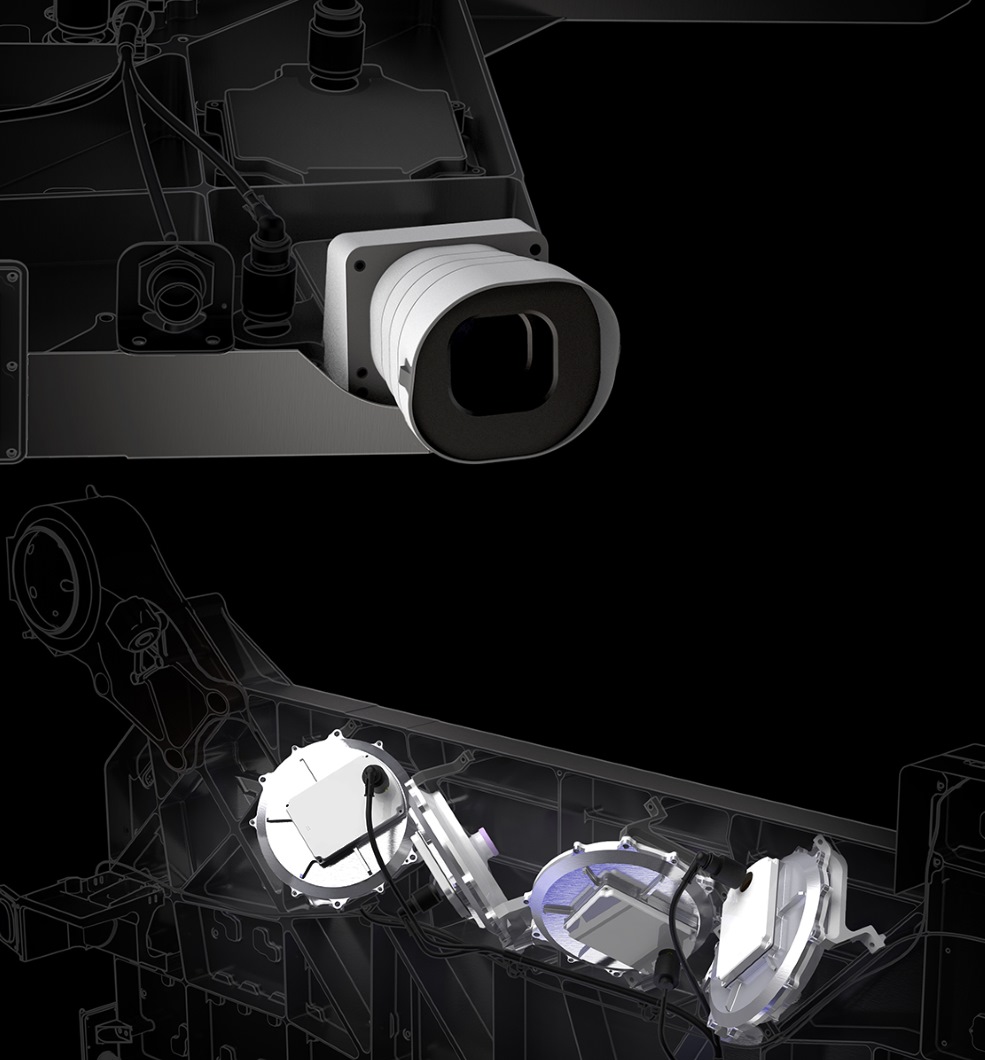
Lastly there is the star tracker and collision avoidance system. This isn’t very well explained by SpaceX, so we can only surmise based on what we see. The star tracker tells each satellite its attitude, or orientation in space — presumably by looking at the stars and comparing that with known variables like time of day on Earth and so on. This ties in with collision avoidance, which uses the government’s database of known space debris and can adjust course to avoid it.

How? The image on the Starlink site shows four discs at perpendicular orientations. This suggests they’re reaction wheels, which store kinetic energy and can be spun up or slowed down to impart that force on the craft, turning it as desired. Very clever little devices actually, and quite common in satellites. These would control the attitude and the thruster would give a little impulse, and the debris is avoided. The satellite can return to normal orbit shortly thereafter.

A SpaceX representative told me that the debris tracker hooks into the Air Force’s Combined Space Operations Center, where trajectories of all known space debris are tracked. These trajectories are checked against those of the satellites, and if a possible collision is detected the course changes are made, well ahead of time. This isn’t a matter of seeing a rock and dodging it, more like air traffic control.

We still don’t know a lot about the Starlink system. For instance, what do its ground stations look like? Unlike Ubiquitilink, you can’t receive a Starlink signal directly on your phone. So you’ll need a receiver, which Musk has said in the past is about the size of a pizza box. But small, large, or extra large? Where can it be mounted, and how much does it cost?

In a media briefing last week Musk described it in slightly more specific terms: “It’s like a flat disc, but unlike a, say, a DirecTV satellite dish which has to point in a specific direction, has to point very precisely at the geostationary satellite.  In the case of a Starlink dish, you can basically kind of put it at almost any angle that is reasonably pointed at the sky.”

The questions of interconnection are also a mystery. Say a Starlink user wants to visit a website hosted in Croatia. Does the signal go up to Starlink, between satellites, and down to the nearest base station? Does it go down at a big interconnect point on the backbone serving that region? Does it go up and then come down 20 miles from your house at the place where fiber connects to the local backbone? It may not matter much to ordinary users, but for big services — think Netflix — it could be very important.

And lastly, how much does it cost? SpaceX wants to make this competitive with terrestrial broadband, which is a little hard to believe considering the growth of fiber, but also not that hard to believe because of telecoms dragging their heels getting to rural areas still using DSL. Out there, Starlink might be a godsend, while in big cities it might be superfluous.

Chances are we won’t know for a long time. The 60 satellites up there right now are only the very first wave, and don’t comprise anything more than a test bed for future services. Starlink will have to prove these things work as planned, and then send up several hundred more before it can offer even the most rudimentary service. Of course, that is the plan, and might even be accomplished by the end of the year.


from Gadgets – TechCrunch https://tcrn.ch/2WvKMIB
//

Wednesday, 29 May 2019

Roland’s tiny R-07 recorder is better than your phone’s recorder app

In an era when the smartphone can do everything, why do you need a standalone audio recorder? Roland, makers of music gear, might have an answer.

Their R-07 voice recorder is about as big as an original iPod and is designed for music recording, practice and playback. It features two microphones on top as well as an auxiliary microphone input. It also includes a headphone jack and supports Bluetooth.

As a recorder, the R-07 is a single-touch marvel. You record by turning it on and pressing the center button. It records to MicroSD card and can create up to 96 kHz 24-bit WAVs and 320 kbps MP3s. It runs on USB power or two AA batteries.

A Scene mode makes the R-07 a bit more interesting. It has built-in limiters and low cut, essentially features that will make voices crisper. Further, you can set it to “Music Long” to record longer performances while using less drive space.

Rehearsal mode lets you hear live audio through audio playback, a great feature for budding musicians.

Finally, you can control up to four devices at once via Bluetooth, allowing you to mic various members of a band, for example.

The R-07 costs an acceptable $199 and is shipping now. While it doesn’t beat a massive recorder with dual mics and XLR inputs like the Zoom H6 in terms of versatility, in terms of portability and sound quality — not to mention music-friendly features — the R-07 is a great alternative to the Voice Memos app on your phone.


from Gadgets – TechCrunch https://tcrn.ch/2HBA9M1
//

Friday, 24 May 2019

You can do it, robot! Watch the beefy, 4-legged HyQReal pull a plane

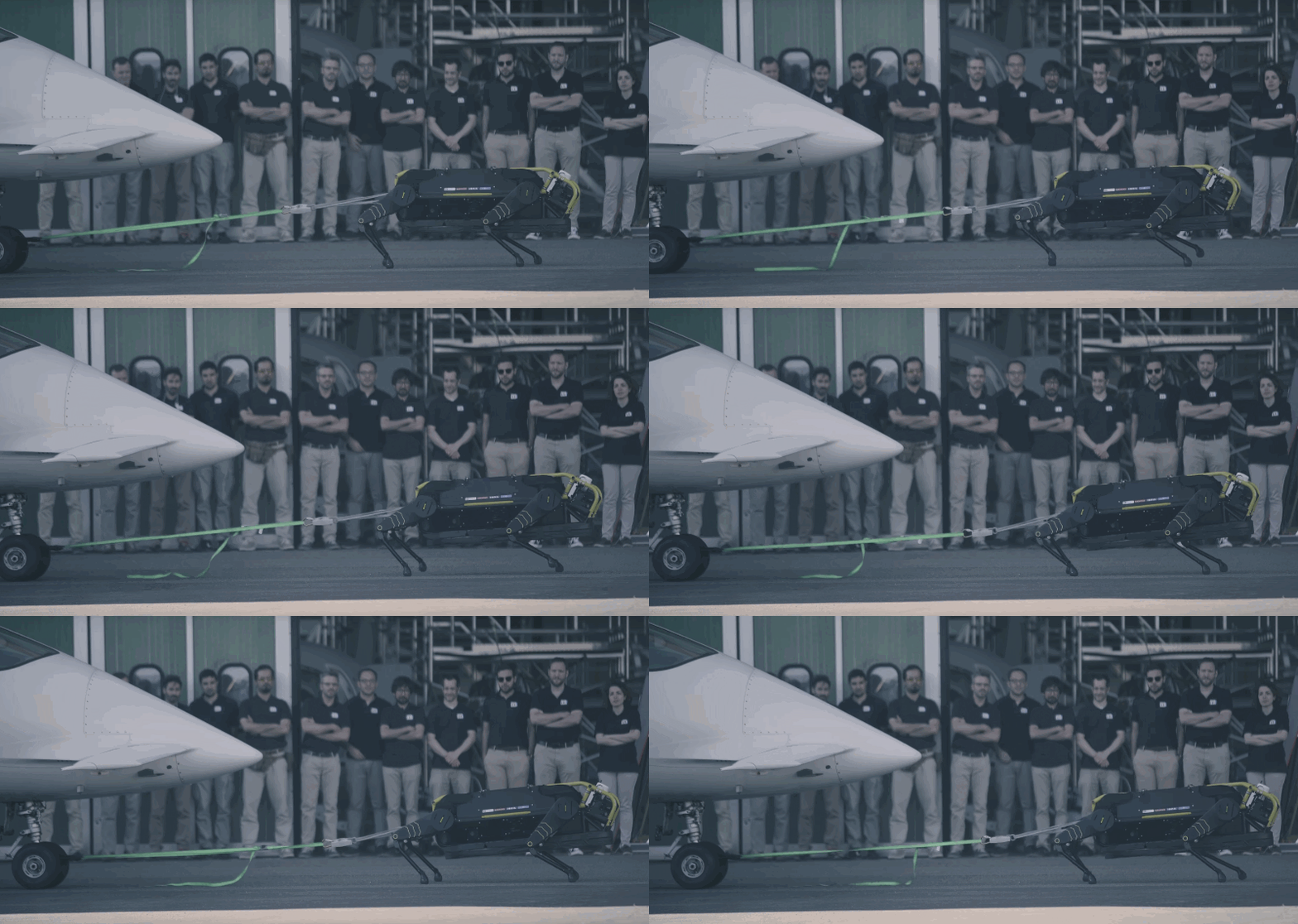
It’s not really clear just yet exactly what all these powerful, agile quadrupedal robots people are working on are going to do, exactly, but even so it never gets old watching them do their thing. The latest is an Italian model called HyQReal, which demonstrates its aspiration to winning strongman competitions, among other things, by pulling an airplane behind it.

The video is the debut for HyQReal, which is the successor to HyQ, a much smaller model created years ago by the Italian Institute of Technology, and its close relations. Clearly the market, such as it is, has advanced since then, and discerning customers now want the robot equivalent of a corn-fed linebacker.

That’s certainly how HyQReal seems to be positioned; in its video, the camera lingers lovingly on its bulky titanium haunches and thick camera cage. Its low slung body recalls a bulldog rather than a cheetah or sprightly prey animal. You may think twice before kicking this one.

The robot was presented today at the International Conference on Robotics and Automation, where in a workshop (documented by IEEE Spectrum) the team described HyQReal’s many bulkinesses.

It’s about four feet long and three high, weighs 130 kilograms (around 287 pounds), of which the battery comprises 15 — enough for about two hours of duty. It’s resistant to dust and water exposure and should be able to get itself up should it fall or tip over. The robot was created in collaboration with Moog, which created special high-powered hydraulics for the purpose.

It sounds good on paper, and the robot clearly has the torque needed to pull a small passenger airplane, as you can see in the video. But that’s not really what robots like this are for — they need to generate versatility and robustness under a variety of circumstances, and the smarts to navigate a human-centric world and provide useful services.

Right now HyQReal is basically still a test bed — it needs to have all kinds of work done to make sure it will stand up under conditions that robots like Spot Mini have already aced. And engineering things like arm or cargo attachments is far from trivial. All the same it’s exciting to see competition in a space that, just a few years back, seemed totally new (and creepy).


from Gadgets – TechCrunch https://tcrn.ch/2WpVBeU
//

Spansive’s first wireless charger powers multiple phones simultaneously and works through thick cases

When Pi Charging (winner of TechCrunch Disrupt SF 2017) rebranded as Spansive last month, the company also dropped plans for its previously shown cone-shaped charger capable of charging phones placed within a few inches around it. That charger would’ve required special cases for each device — and as the world quickly adopted built-in wireless charging standards like Qi, that no longer seemed like the right move.

They did say, however, that they were working on a different, Qi-centric wireless charging device with a “few tricks” of its own, and that it’d arrive by summer. This is that charger.

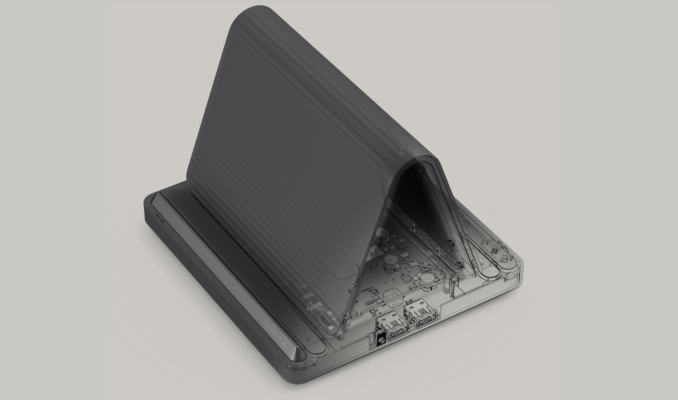
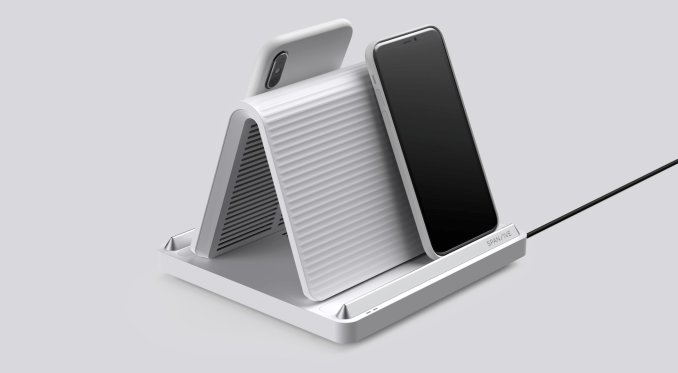
Called the Spansive Source, it’s a base station capable of wirelessly charging four phones at once. Unlike their cone-shaped charger, you’ll need to set your phone pretty much right on top of the Source — but unlike most pad-based wireless chargers, you won’t need to fuss with getting it aligned just right. Built using some of the same concepts they’d figured out with the cone-shaped charger, Spansive tells me that Source can determine where your phone is placed on the pad and adjust its array of magnetic charging coils accordingly. It’s also able to charge right through many brands of phone cases.

Spansive CEO and co-founder John MacDonald brought a few of his chargers to our office — and, while it’s tough in a short demo to gauge how well something like this works, it seemed to do what they promised. He placed one phone after another onto the base station, and each one’s screen lit up, its respective battery percentage ticking upward. He placed a phone with a thick Otterbox on the charger; it started juicing right up. The last phone he added to the pile had an Otterbox and a PopSocket on it, and it seemed to work all the same.

Spansive says Source charges at a rate of up to 5W for each phone being charged wirelessly, while the USB ports push up to 12W. MacDonald tells me that the wireless charging rate isn’t impacted by the number of phones on the pad; in other words, the first phone won’t charge slower just because you’ve added another phone or two to the charger.

MacDonald was careful to note that the Source is built to charge phones, specifically. The angled design would make resting something like an Apple Watch on it a bit awkward, for example — so Source also has two USB ports on its side, meant to help charge your various other devices. Even within the phone category, Spansive isn’t promising full compatibility across all Qi phones right off the bat; MacDonald tells me they’ve focused on getting it to work with Samsung’s Galaxy phones (beginning with the S7) and iPhones (beginning with iPhone 8), with certification/compatibility with other phones likely coming down the road via over-the-air software update. It has Wi-Fi built-in for pulling down those updates, with a button on Source’s base for wiping your Wi-Fi credentials with a tap if you don’t want yet another IoT device on your network indefinitely.

Source goes up for sale today at $189, shipping immediately in two colors: white and charcoal.


from Gadgets – TechCrunch https://tcrn.ch/2YPOrhP
//

Indiegogo hires Reddit’s Andy Yang as new CEO

Indiegogo has a new chief. Andy Yang will take over for outgoing CEO David Mandelbrot, who is stepping down. According to sources close to the company, several other Indiegogo employees are also leaving. Indiegogo has yet to confirm this claim or state the number or reason for their departure.

Mandelbrot announced the move on LinkedIn, citing “personal reasons” as why he’s leaving. He was at Indiegogo for six years, starting as SVP of Operations in August of 2013.

Andy Yang comes to Indiegogo from Reddit, where he was most recently leading its product team. He was previously the CEO of 500px.

Yang comes to Indiegogo at a critical time for the company. Consumers are increasingly becoming jaded by crowdfunding projects that leave backers without their promised product. Under Mandelbrot’s leadership, he helped Indiegogo net several key partners, including General Electric and Lego. The company also enlisted the help of several manufacturing and marketing professionals to help backers make projects into products.

TechCrunch requested an interview with Yang, but has yet to be granted that request.


from Gadgets – TechCrunch https://tcrn.ch/2HQSIdI
//

Panic’s Playdate is a pint-sized gaming machine with a ‘season’ of 12 intriguing titles

Tired of your smartphone games, and don’t want to take the Switch with you on the train today? Panic, renowned creator of useful Mac apps and more recently publisher of interesting games, has created a tiny handheld console that goes anywhere and receives a regular trickle of new games. It’s called Playdate.

One has to admire the gumption of jumping into a space that has been so thoroughly dominated by Nintendo and smartphones over the last decade that hardly anyone has even attempted to break in. But Panic isn’t trying to build an empire — just do something interesting and new.

“Nothing’s surprising anymore and surprises are great!” reads the Playdate’s FAQ. “Panic saw an opportunity for something truly different in the world of video games. Something small-scale that could deliver a dose of fun and delight to video game players who have otherwise seen it all.”

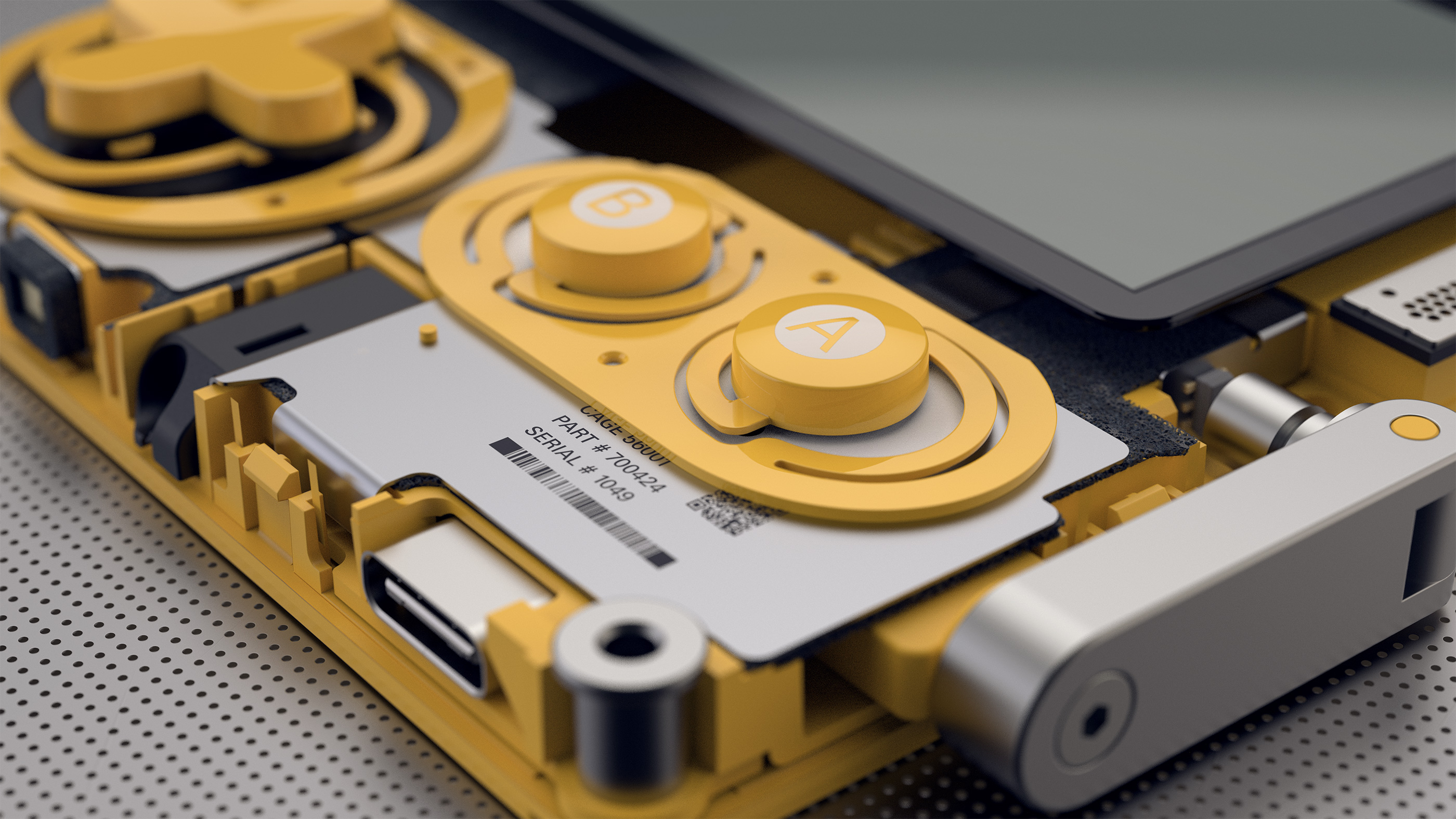
It’s different, all right. Bright yellow with a black and white screen and with no spot for removable media like cartridges, the Playdate is more or less self-contained, except of course for the charger and wireless connection. And it’s over the wireless connection that the games come: 12 of them, exclusives created by well-known developers like Keita Takahashi (Katamari Damacy), Bennett Foddy (Getting Over It) and Zach Gage (Ridiculous Fishing).

They appear one at a time, weekly; the first title is Crankin’s Time Travel Adventure, from Takahashi. Oh, right — did I mention it has a crank?

Yes, the gadget has the usual d-pad and two buttons, but on the side is a little crank that you’ll be using in all these weird little games. In the first one, for instance, you use it to advance and reverse time. Perhaps you’ll be reeling in fish, charging a flashlight, grinding stones for crafting or any number of other tasks. It’s not necessary for every game, though, so don’t worry if it seems too weird. (The crank was the inspired choice of Teenage Engineering, Panic’s hardware design partner.)

In case you didn’t notice, the games are also black and white. The 2.7-inch, 400×240 screen has no backlight; it isn’t e-paper, but rather just an LCD without color filters. I’ve been saying we should do this for years! It should make for improved battery life and change the way you play a bit — in bed by the light of a lamp instead of on the couch looking at a bright screen.

“We thought Playdate needed to be a different experience than the one you get from your phone, or from a TV-based console,” said Panic’s Director of Special Projects, Greg Maletic, in an email. “This bizarre 1-bit reflective screen was a big part of that: you just won’t see a lot of devices go this route, and for us, that was part of the attraction. And it’s worked out really well: developers have felt energized designing for this weird but cool screen.”

When the 12 titles have all been delivered, there’s the possibility that more will come, but that depends on lots of things, the company said. But they were careful to make the platform easily hackable.

“Most hardware platforms nowadays have tight restrictions, so it was important to us that Playdate be open enough to allow experimentation,” said Maletic. “That’s the kind of platform that we, as developers, were personally craving. So we’ve made sure that people will be able to develop their own games and easily share them with their friends, without having to worry about plagues of mobile development like code signing and provisioning profiles.”

You’ll be able to preorder a Playdate for $149 later in the year. Yeah, it isn’t cheap — but it’s weird and fun and for now one of a kind. That has to count for something in the increasingly genericized world of gaming hardware.


from Gadgets – TechCrunch https://tcrn.ch/2wcx0M1
//

Thursday, 23 May 2019

My desk doesn’t deserve the $600 Dyson Lightcycle lamp

Like many of you, I’m assuming, my desk was purchased at Ikea and is the center of my life. Such as it is, the desk is littered with bits of crackers, memory cards, branded Moleskin notebooks and countless coffee cups. I’m not a slob. I just live here. The desk is clean enough.

Then Dyson sent me its new task light to try out. My desk suddenly felt dirty. After assembling the light, I looked around and took inventory of my life and choices. If I was going to have something as lovely as this on my desk, I would have to have a cleaner space. I cleaned up my desk.

[gallery ids="1831413,1831417,1831415,1831420,1831419"]

Review

The Dyson Lightcycle is, well, a light. It makes the room brighter. And because it’s made by Dyson, it’s over-engineered and expensive. The Lightcycle is $600 and I’m not going to attempt to justify its price. I can’t. This is a product that costs countless times over its utility.

First the good.

The light works. Hit a button on the top and it turns on. Slide your finger across the top and the light’s brightness and color temperature changes.

The light is constructed with an insane attention to detail. It’s perfectly balanced. As the light slides up and down its main pole, a counterweight ensures an effortless motion. Likewise, the light arm slides back and forth on three large wheels. All the while, its seemingly wireless with all the connections and wires hidden throughout the mechanisms.

The Dyson Task light is beautiful. It’s impossible to look at the light and not be impressed by the construction. The function of the design is perfect for my desk. I placed it in the center of my workspace and the long arm allows it to reach where ever it’s needed.

The light works great and thanks to adjustable color temperatures, works in every situation. There are two touch-sensitive bars on top of the unit. Just slide a fingertip across the bars to make the light brighter or change the color temp. Dyson took the light temperatures option to the next level. The owner can connect the lamp to a smartphone app through Bluetooth, and when the light is connected, it will sync the color temp to the idea setting to match the owner’s location on Earth. It’s a clever function and is said to have a host of mental and physical benefits.

According to Dyson, this lamp’s LED unit is good for 60 years thanks to a heat pipe system. It’s said to pull the excess heat generated by the LED away from the unit, ensuring it lasts as long as possible.

And now the bad.

This lamp costs $600. That’s a hard sell. There are countless minimalist task lamps on the market. None have all the features found on the Dyson Lightcycle, but one could argue that a person doesn’t need all of the features.

I found the light produced by the Lightcycle adequate. The intensity is adjustable and there’s even a supercharged mode that turns the intensity up to 11 — but that’s only accessible through the smartphone companion app. To me, when you need extra light, you need it immediately and not after the 30 seconds needed to use an app.

The Lightcycle’s main selling point is the automatic adjustable color temperature. It’s a lovely feature and my eyes feel great after using this lamp. Just to be clear, there are a lot of products on the market for much less than the Lightcycle that can replicate the ideal color temperature. Get one. They’re a great gadget to have around in the winter months.

Bottom line.

I can’t recommend a person spend $600 on a light. That said, the Dyson Lightcycle is a lovely object, should last a lifetime and works as advertised.


from Gadgets – TechCrunch https://tcrn.ch/2Eppjq8
//

Wednesday, 22 May 2019

Oculus Quest and Rift S now shipping

Facebook-owned Oculus is shipping its latest VR headgear from today. Pre-orders for the PC-free Oculus Quest and the higher end Oculus Rift S opened up three weeks ago.

In a launch blog, Oculus touts the new hardware’s “all-in-one, fully immersive 6DOF VR” — writing: “We’re bringing the magic of presence to more people than ever before — and we’re doing it with the freedom of fully untethered movement.”

For a less varnished view on what it’s like to stick a face-computer on your head, you can check out our reviews by clicking on the links below…

Oculus Quest

TC: “The headset may not be the most powerful, but it is doubtlessly the new flagship VR product from Facebook”

Oculus Rift S

TC: “It still doesn’t feel like a proper upgrade to a flagship headset that’s already three years old, but it is a more fine-tuned system that feels more evolved and dependable”

The Oculus blog contains no detail on pre-order sales for the headsets — beyond a few fine-sounding words.

Meanwhile, Facebook has, for months, been running native ads for Oculus via its eponymous and omnipresent social network — although there’s no explicit mention of the Oculus brand unless you click through to “learn more.”

Instead, it’s pushing the generic notion of “all-in-one VR,” shrinking the Oculus brand stamp on the headset to an indecipherable micro-scribble.

Here’s one of Facebook’s ads that targeted me in Europe, back in March, for e.g.:

For those wanting to partake of Facebook-flavored face gaming (and/or immersive movie watching), the Oculus Quest and Rift S are available to buy via oculus.com and retail partners including Amazon, Best Buy, Newegg, Walmart and GameStop in the U.S.; Currys PC World, FNAC, MediaMarkt and more in the EU and U.K.; and Amazon in Japan.

Just remember to keep your mouth shut.


from Gadgets – TechCrunch https://tcrn.ch/2WecHfY
//

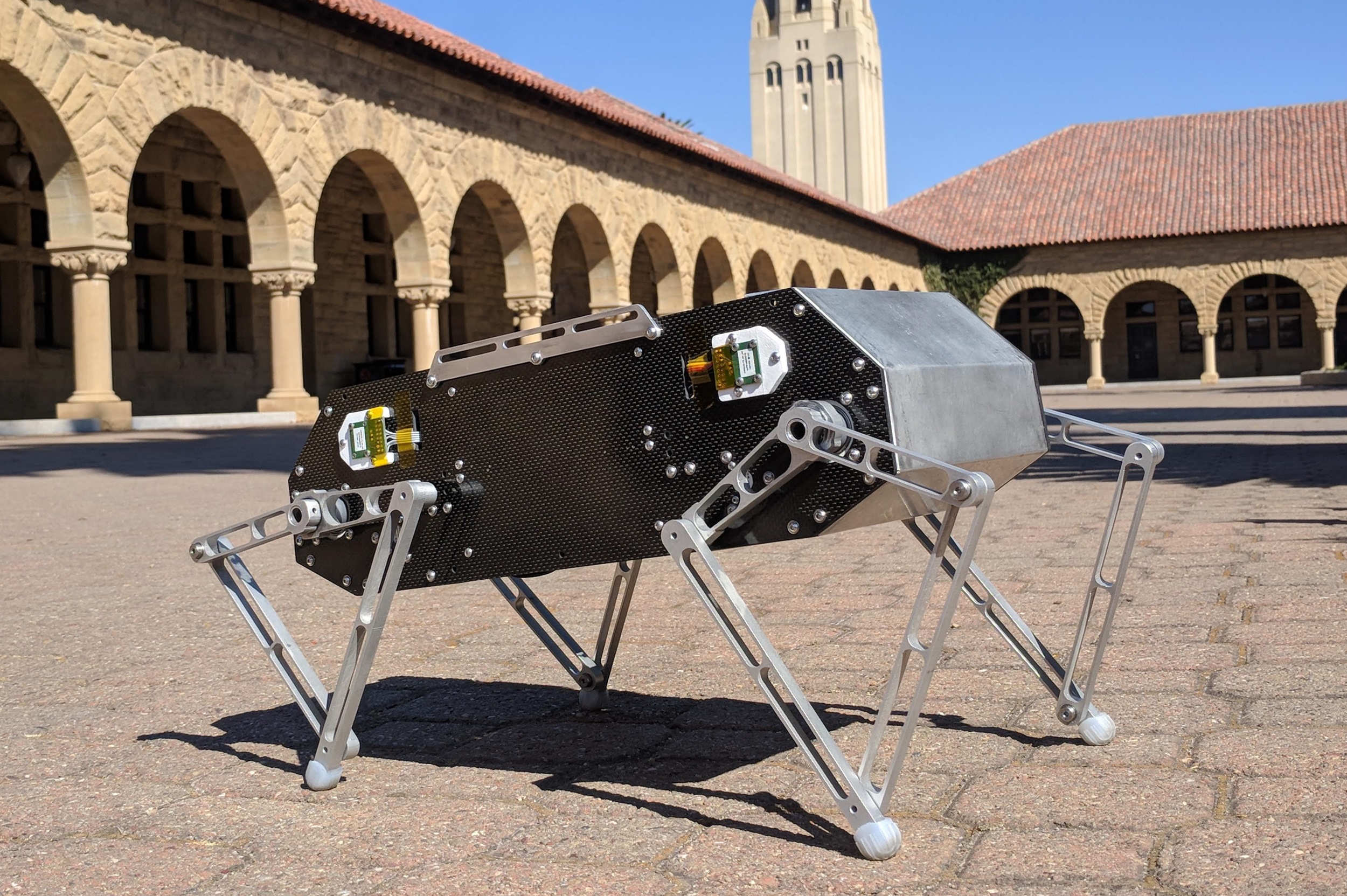
Stanford’s Doggo is a petite robotic quadruped you can (maybe) build yourself

Got a few thousand bucks and a good deal of engineering expertise? You’re in luck: Stanford students have created a quadrupedal robot platform called Doggo that you can build with off-the-shelf parts and a considerable amount of elbow grease. That’s better than the alternatives, which generally require a hundred grand and a government-sponsored lab.

Due to be presented (paper on arXiv here) at the IEEE International Conference on Robots and Automation, Doggo is the result of research by the Stanford Robotics Club, specifically the Extreme Mobility team. The idea was to make a modern quadrupedal platform that others could build and test on, but keep costs and custom parts to a minimum.

The result is a cute little bot with rigid-looking but surprisingly compliant polygonal legs that has a jaunty, bouncy little walk and can leap more than three feet in the air. There are no physical springs or shocks involved, but by sampling the forces on the legs 8,000 times per second and responding as quickly, the motors can act like virtual springs.

It’s limited in its autonomy, but that’s because it’s built to move, not to see and understand the world around it. That is, however, something you, dear reader, could work on. Because it’s relatively cheap and doesn’t involve some exotic motor or proprietary parts, it could be a good basis for research at other robotics departments. You can see the designs and parts necessary to build your own Doggo right here.

“We had seen these other quadruped robots used in research, but they weren’t something that you could bring into your own lab and use for your own projects,” said Doggo lead Nathan Kau in a Stanford news post. “We wanted Stanford Doggo to be this open source robot that you could build yourself on a relatively small budget.”

In the meantime, the Extreme Mobility team will be both improving on the capabilities of Doggo by collaborating with the university’s Robotic Exploration Lab, and also working on a similar robot but twice the size — Woofer.


from Gadgets – TechCrunch https://tcrn.ch/2Wgc8Cf
//

Why is Facebook doing robotics research?

It’s a bit strange to hear that the world’s leading social network is pursuing research in robotics rather than, say, making search useful, but Facebook is a big organization with many competing priorities. And while these robots aren’t directly going to affect your Facebook experience, what the company learns from them could be impactful in surprising ways.

Though robotics is a new area of research for Facebook, its reliance on and bleeding-edge work in AI are well known. Mechanisms that could be called AI (the definition is quite hazy) govern all sorts of things, from camera effects to automated moderation of restricted content.

AI and robotics are naturally overlapping magisteria — it’s why we have an event covering both — and advances in one often do the same, or open new areas of inquiry, in the other. So really it’s no surprise that Facebook, with its strong interest in using AI for a variety of tasks in the real and social media worlds, might want to dabble in robotics to mine for insights.

What then could be the possible wider applications of the robotics projects it announced today? Let’s take a look.

Learning to walk from scratch

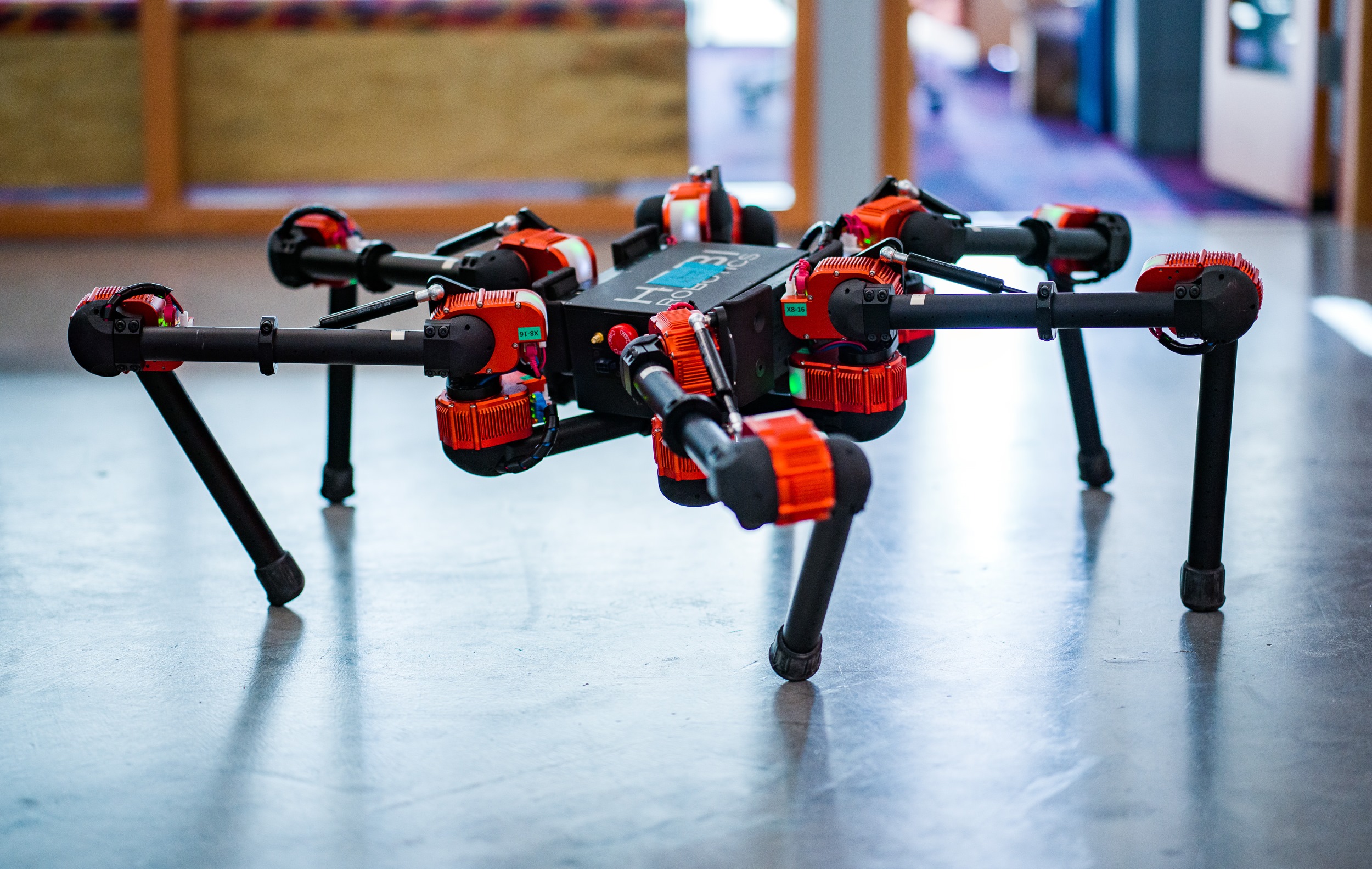
“Daisy,” the hexapod robot

Walking is a surprisingly complex action, or series of actions, especially when you’ve got six legs, like the robot used in this experiment. You can program in how it should move its legs to go forward, turn around, and so on, but doesn’t that feel a bit like cheating? After all, we had to learn on our own, with no instruction manual or settings to import. So the team looked into having the robot teach itself to walk.

This isn’t a new type of research — lots of roboticists and AI researchers are into it. Evolutionary algorithms (different but related) go back a long way, and we’ve already seen interesting papers like this one:

By giving their robot some basic priorities like being “rewarded” for moving forward, but no real clue how to work its legs, the team let it experiment and try out different things, slowly learning and refining the model by which it moves. The goal is to reduce the amount of time it takes for the robot to go from zero to reliable locomotion from weeks to hours.

What could this be used for? Facebook is a vast wilderness of data, complex and dubiously structured. Learning to navigate a network of data is of course very different from learning to navigate an office — but the idea of a system teaching itself the basics on a short timescale given some simple rules and goals is shared.

Learning how AI systems teach themselves, and how to remove roadblocks like mistaken priorities, cheating the rules, weird data-hoarding habits and other stuff is important for agents meant to be set loose in both real and virtual worlds. Perhaps the next time there is a humanitarian crisis that Facebook needs to monitor on its platform, the AI model that helps do so will be informed by the auto-didactic efficiencies that turn up here.

Leveraging “curiosity”

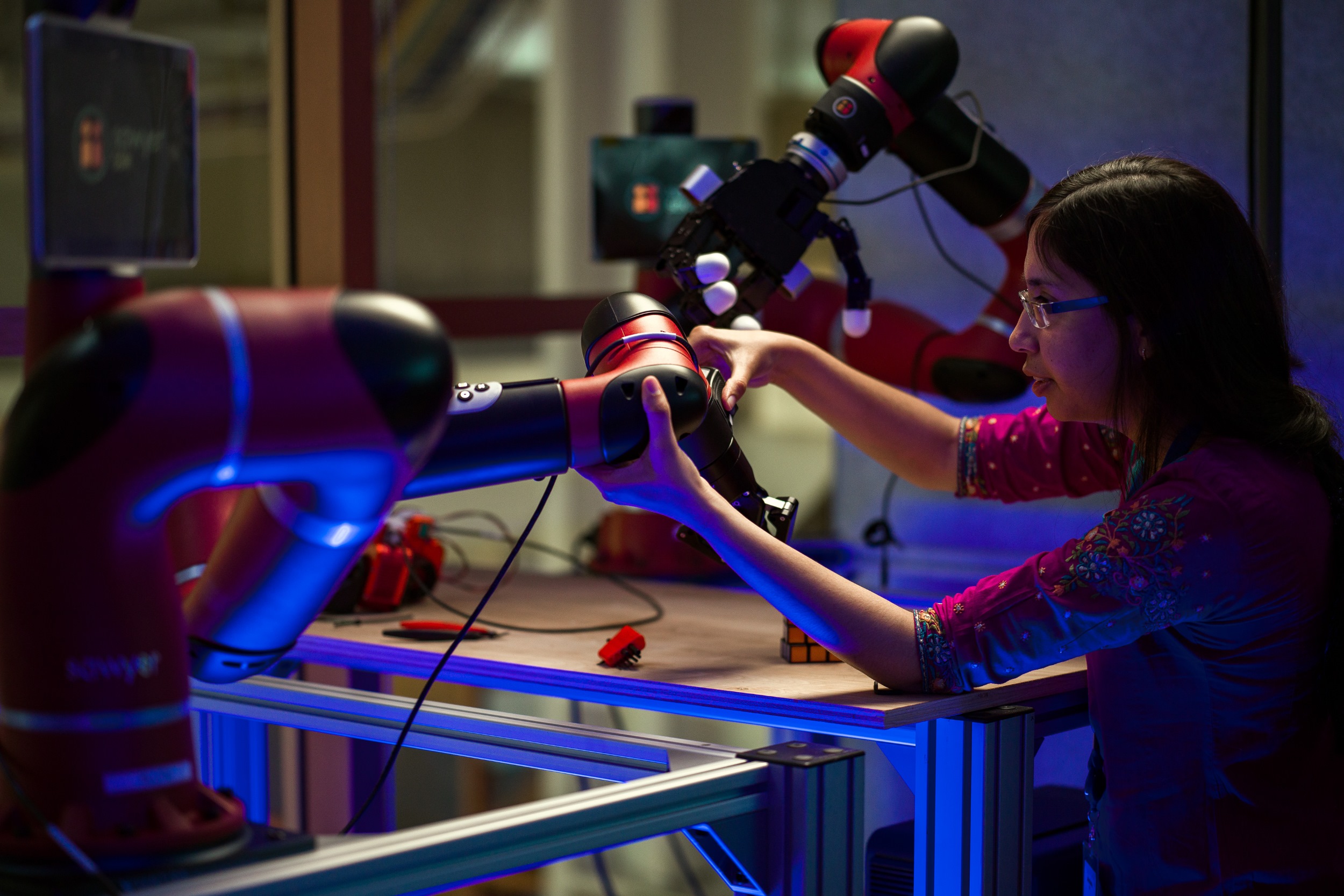
Researcher Akshara Rai adjusts a robot arm in the robotics AI lab in Menlo Park (Facebook)

This work is a little less visual, but more relatable. After all, everyone feels curiosity to a certain degree, and while we understand that sometimes it kills the cat, most times it’s a drive that leads us to learn more effectively. Facebook applied the concept of curiosity to a robot arm being asked to perform various ordinary tasks.

Now, it may seem odd that they could imbue a robot arm with “curiosity,” but what’s meant by that term in this context is simply that the AI in charge of the arm — whether it’s seeing or deciding how to grip, or how fast to move — is given motivation to reduce uncertainty about that action.

That could mean lots of things — perhaps twisting the camera a little while identifying an object gives it a little bit of a better view, improving its confidence in identifying it. Maybe it looks at the target area first to double check the distance and make sure there’s no obstacle. Whatever the case, giving the AI latitude to find actions that increase confidence could eventually let it complete tasks faster, even though at the beginning it may be slowed by the “curious” acts.

What could this be used for? Facebook is big on computer vision, as we’ve seen both in its camera and image work and in devices like Portal, which (some would say creepily) follows you around the room with its “face.” Learning about the environment is critical for both these applications and for any others that require context about what they’re seeing or sensing in order to function.

Any camera operating in an app or device like those from Facebook is constantly analyzing the images it sees for usable information. When a face enters the frame, that’s the cue for a dozen new algorithms to spin up and start working. If someone holds up an object, does it have text? Does it need to be translated? Is there a QR code? What about the background, how far away is it? If the user is applying AR effects or filters, where does the face or hair stop and the trees behind begin?

If the camera, or gadget, or robot, left these tasks to be accomplished “just in time,” they will produce CPU usage spikes, visible latency in the image and all kinds of stuff the user or system engineer doesn’t want. But if it’s doing it all the time, that’s just as bad. If instead the AI agent is exerting curiosity to check these things when it senses too much uncertainty about the scene, that’s a happy medium. This is just one way it could be used, but given Facebook’s priorities it seems like an important one.

Seeing by touching

Although vision is important, it’s not the only way that we, or robots, perceive the world. Many robots are equipped with sensors for motion, sound and other modalities, but actual touch is relatively rare. Chalk it up to a lack of good tactile interfaces (though we’re getting there). Nevertheless, Facebook’s researchers wanted to look into the possibility of using tactile data as a surrogate for visual data.

If you think about it, that’s perfectly normal — people with visual impairments use touch to navigate their surroundings or acquire fine details about objects. It’s not exactly that they’re “seeing” via touch, but there’s a meaningful overlap between the concepts. So Facebook’s researchers deployed an AI model that decides what actions to take based on video, but instead of actual video data, fed it high-resolution touch data.

Turns out the algorithm doesn’t really care whether it’s looking at an image of the world as we’d see it or not — as long as the data is presented visually, for instance as a map of pressure on a tactile sensor, it can be analyzed for patterns just like a photographic image.

What could this be used for? It’s doubtful Facebook is super interested in reaching out and touching its users. But this isn’t just about touch — it’s about applying learning across modalities.

Think about how, if you were presented with two distinct objects for the first time, it would be trivial to tell them apart with your eyes closed, by touch alone. Why can you do that? Because when you see something, you don’t just understand what it looks like, you develop an internal model representing it that encompasses multiple senses and perspectives.

Similarly, an AI agent may need to transfer its learning from one domain to another — auditory data telling a grip sensor how hard to hold an object, or visual data telling the microphone how to separate voices. The real world is a complicated place and data is noisier here — but voluminous. Being able to leverage that data regardless of its type is important to reliably being able to understand and interact with reality.

So you see that while this research is interesting in its own right, and can in fact be explained on that simpler premise, it is also important to recognize the context in which it is being conducted. As the blog post describing the research concludes:

We are focused on using robotics work that will not only lead to more capable robots but will also push the limits of AI over the years and decades to come. If we want to move closer to machines that can think, plan, and reason the way people do, then we need to build AI systems that can learn for themselves in a multitude of scenarios — beyond the digital world.

As Facebook continually works on expanding its influence from its walled garden of apps and services into the rich but unstructured world of your living room, kitchen and office, its AI agents require more and more sophistication. Sure, you won’t see a “Facebook robot” any time soon… unless you count the one they already sell, or the one in your pocket right now.


from Gadgets – TechCrunch https://tcrn.ch/2K0OB1N
//

This clever transforming robot flies and rolls on its rotating arms

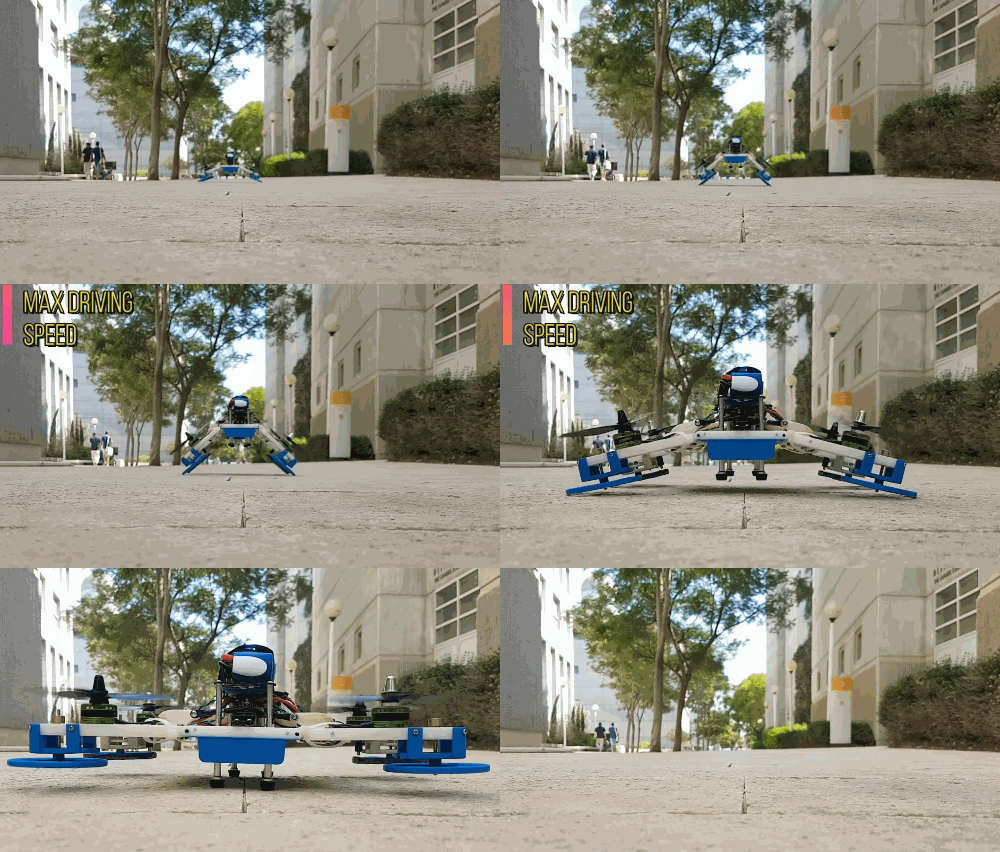
There’s great potential in using both drones and ground-based robots for situations like disaster response, but generally these platforms either fly or creep along the ground. Not the “Flying STAR,” which does both quite well, and through a mechanism so clever and simple you’ll wish you’d thought of it.

Conceived by researchers at Ben-Gurion University in Israel, the “flying sprawl-tuned autonomous robot” is based on the elementary observation that both rotors and wheels spin. So why shouldn’t a vehicle have both?

Well, there are lots of good reasons why it’s difficult to create such a hybrid, but the team, led by David Zarrouk, overcame them with the help of today’s high-powered, lightweight drone components. The result is a robot that can easily fly when it needs to, then land softly and, by tilting the rotor arms downwards, direct that same motive force into four wheels.

Of course you could have a drone that simply has a couple of wheels on the bottom that let it roll along. But this improves on that idea in several ways. In the first place, it’s mechanically more efficient because the same motor drives the rotors and wheels at the same time — though when rolling, the RPMs are of course considerably lower. But the rotating arms also give the robot a flexible stance, large wheelbase and high clearance that make it much more capable on rough terrain.

You can watch FSTAR fly, roll, transform, flatten and so on in the following video, prepared for presentation at the IEEE International Convention on Robotics and Automation in Montreal:

The ability to roll along at up to 8 feet per second using comparatively little energy, while also being able to leap over obstacles, scale stairs or simply ascend and fly to a new location, give FSTAR considerable adaptability.

“We plan to develop larger and smaller versions to expand this family of sprawling robots for different applications, as well as algorithms that will help exploit speed and cost of transport for these flying/driving robots,” said Zarrouk in a press release.

Obviously at present this is a mere prototype, and will need further work to bring it to a state where it could be useful for rescue teams, commercial operations and the military.


from Gadgets – TechCrunch https://tcrn.ch/2WdeJNo
//